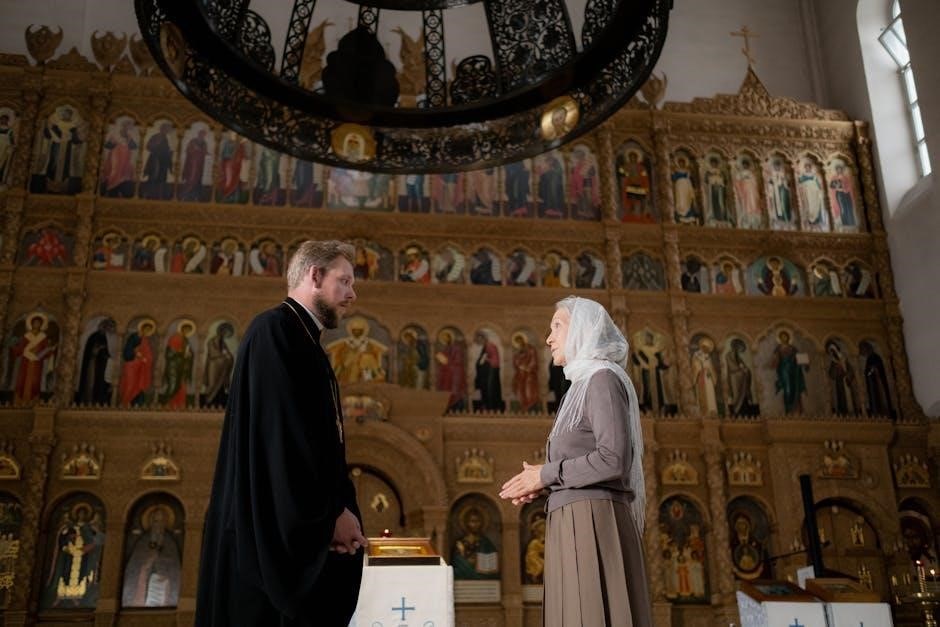
Iconostases, vital in Orthodox churches, are explored in numerous resources, including accessible PDF documents detailing their history and significance․
These barriers, evolving over centuries, are visually dominant, far surpassing individual icons in liturgical focus, as detailed in available scholarly PDFs․
What is an Iconostasis?
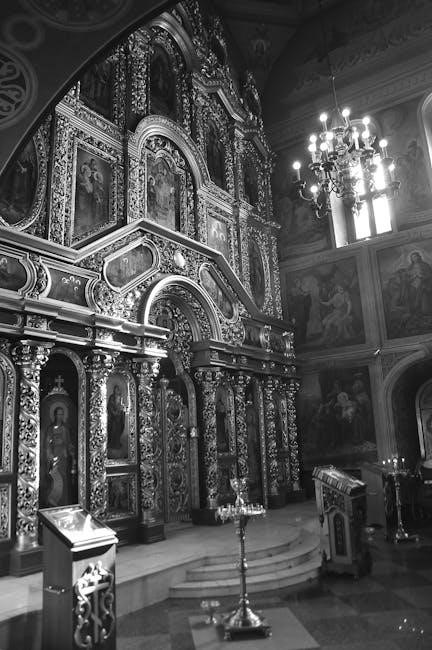
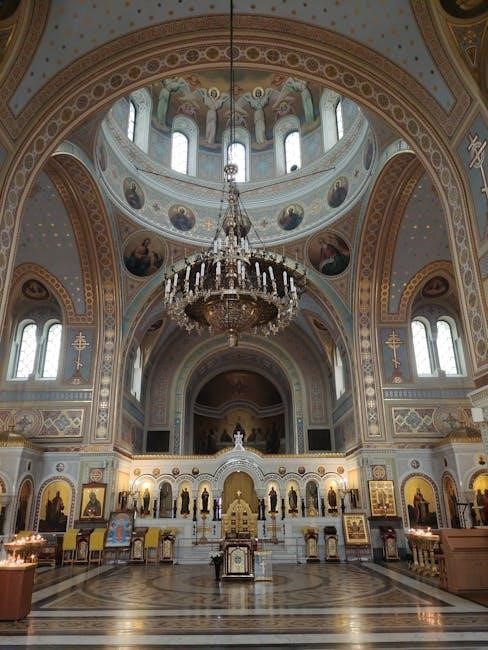
The iconostasis, derived from the Greek eikonostasion meaning “icon stand,” is a defining architectural feature within Orthodox Christian churches and Eastern Catholic churches․ It functions as a physical and symbolic division separating the nave – the area for the congregation – from the sanctuary, or altar, where the Eucharist is consecrated․ More than a simple barrier, it’s a meticulously arranged collection of icons depicting Christ, the Theotokos (Mother of God), angels, saints, and scenes from scripture․
Numerous resources, readily available as PDF documents, delve into the iconostasis’s multifaceted nature․ These PDFs explain that it isn’t merely a decorative element but a visual representation of heaven, with each tier and icon holding specific theological meaning․ The arrangement isn’t arbitrary; it’s a carefully constructed ‘heavenly hierarchy’ accessible through detailed studies found in digital archives․ Understanding its purpose requires exploring its historical development and liturgical significance, information often compiled in comprehensive PDF guides․
The iconostasis doesn’t sit directly against the altar, but allows for liturgical processions and interaction․
Historical Development of the Iconostasis
The origins of altar barriers predate the fully developed iconostasis, appearing in early Christian churches as low partitions – simple balustrades or curtains – separating the sanctuary․ Over centuries, these evolved, gradually increasing in height and incorporating icons․ Early examples, documented in historical PDFs, show a more modest presentation compared to later, elaborate structures․
The distinct form of the Russian iconostasis, as detailed in scholarly PDF articles, didn’t emerge until the 17th century, becoming a prominent feature through subsequent periods․ Prior to this, barriers were less ornate and icon arrangements varied․ Accessing digitized archives and PDF resources reveals how regional styles developed, influenced by local artistic traditions and liturgical practices․
The development wasn’t linear; it involved periods of simplification and elaboration, reflecting theological shifts and artistic trends․ Comprehensive PDF studies trace this evolution, highlighting the interplay between architecture, sculpture, and religious iconography․
Significance in Orthodox Liturgy
The iconostasis isn’t merely a decorative element; it’s central to the Orthodox liturgical experience, visually defining the boundary between the sacred space of the altar and the nave where the faithful gather․ Detailed explanations within PDF liturgical guides emphasize its role as a symbolic representation of heaven, separating the earthly realm from the divine․
It serves as the backdrop for the Divine Liturgy, with the Royal Doors facilitating processions and symbolizing the gates of paradise․ Scholarly PDF analyses reveal how the arrangement of icons guides the worshiper’s gaze towards the heavenly realm, fostering a sense of spiritual ascent․
Furthermore, PDF resources highlight the iconostasis’s function in concealing and revealing – concealing the sacred mysteries until their proper time, and revealing them through the liturgical actions; Its presence profoundly shapes the worship experience, as documented in numerous theological PDFs․
Architectural Aspects of the Iconostasis
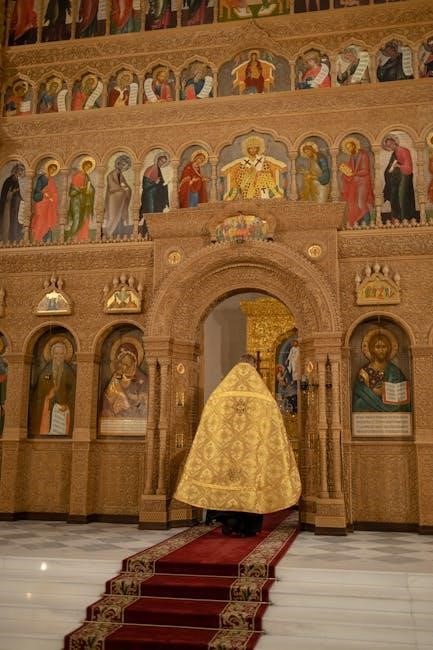
Iconostases blend architecture and sculpture, forming large-scale structures; detailed construction plans and historical analyses are available in comprehensive PDF documents․
Materials Used in Construction
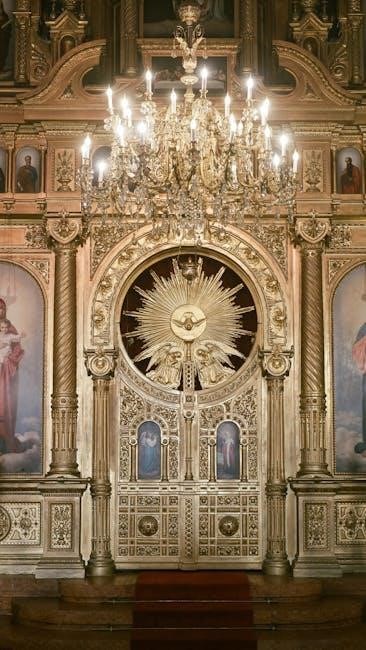
Historically, the construction of iconostases involved a diverse range of materials, reflecting both regional availability and the wealth of the commissioning church or monastery․ Wood was, and remains, the primary material, often utilizing locally sourced varieties like pine, oak, or linden․ These woods provided a stable base for carving and gilding․
However, the embellishment of the iconostasis frequently incorporated more precious materials․ Gold leaf was extensively used to cover carved elements, symbolizing divine light and majesty; Silver, though less common due to its cost, was also employed for detailing and highlighting․ Pigments for the icons themselves were traditionally derived from natural sources – minerals, plants, and even insects – creating vibrant and enduring colors․
Detailed analyses of material composition, including wood species identification and pigment analysis, are often found within specialized PDF documents dedicated to Orthodox art and iconostasis restoration․ These resources provide valuable insights into the craftsmanship and techniques employed by iconographers and woodcarvers throughout history, offering a deeper understanding of the materials’ significance․
Traditional Styles and Regional Variations
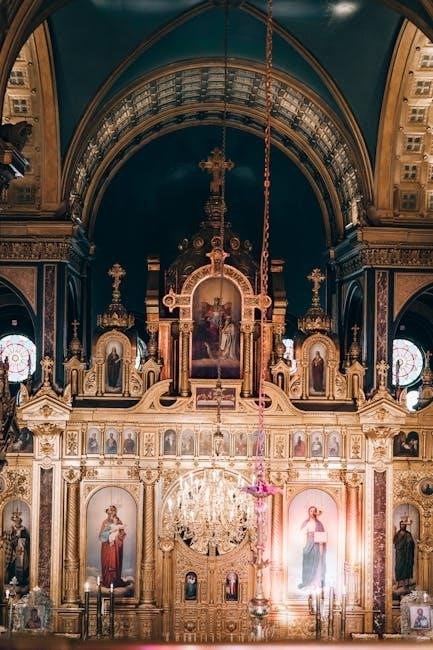
Iconostasis styles exhibit remarkable diversity across Orthodox traditions, shaped by local artistic conventions and liturgical practices․ Russian iconostases are renowned for their height and densely populated tiers, often featuring a multitude of icons and elaborate carvings․ Greek iconostases, conversely, tend to be lower and more restrained in ornamentation, emphasizing clarity and theological symbolism․
Serbian iconostases are distinguished by their unique artistic style, blending Byzantine influences with local folk art traditions, resulting in vibrant and expressive iconography․ Romanian and Bulgarian iconostases also possess distinct characteristics, reflecting their respective cultural identities․
Comprehensive surveys of these regional variations, complete with photographic documentation and stylistic analyses, are frequently compiled in scholarly PDFs․ These resources, often available through online archives, provide invaluable comparative studies, allowing researchers and enthusiasts to appreciate the rich tapestry of iconostasis design throughout the Orthodox world and its documented history․
Height and Dimensions: Standard Practices
While no rigid standards govern iconostasis dimensions, certain practices prevail․ Traditionally, the height of an iconostasis relates to the proportions of the church nave and the altar’s perceived sacred space․ Russian iconostases frequently reach impressive heights, often extending nearly to the ceiling, creating a dramatic visual barrier․ Greek iconostases are typically lower, allowing for greater visibility of the altar during the Divine Liturgy․
The width generally spans the entire width of the sanctuary opening․ Detailed architectural plans and dimensional specifications for various iconostasis styles are often documented in specialized PDF construction manuals and historical surveys․
These PDF resources, available through theological libraries and online archives, provide valuable insights into the practical considerations involved in iconostasis construction, including material requirements and structural engineering principles, alongside historical context․
Iconography within the Iconostasis
Iconostasis iconography, detailed in accessible PDF guides, features tiered arrangements of sacred images, including the Deesis, Prophets, and Evangelists, reflecting theological narratives․
Deesis Row: Central Figures
Deesis, the central tier of the iconostasis, prominently features Christ Pantocrator, often depicted as a judge, flanked by the Theotokos (Mother of God) and John the Baptist – the foremost intercessors․

These figures, meticulously detailed in numerous Orthodox iconography PDF resources, are typically portrayed in a gesture of supplication, beseeching Christ for mercy on behalf of humanity․
The Theotokos and John the Baptist, positioned on either side, represent the Old and New Testaments respectively, bridging the gap between them and emphasizing Christ’s central role․
Detailed PDF studies showcase variations in artistic style across different Orthodox traditions – Russian, Greek, Serbian – each offering unique interpretations of the Deesis composition․
Further PDF documentation illustrates how the arrangement and depiction of these central figures convey profound theological meaning, highlighting themes of judgment, intercession, and divine mercy within the iconostasis’s overall narrative․
Understanding the symbolism requires careful study, readily available through specialized PDF guides on Orthodox iconography․
Local (Church-Specific) Icons
Local icons, adorning the sides of the Royal Doors and extending along the iconostasis, are unique to each church, honoring its patron saint, local historical figures, or particularly venerated ascetics․
These icons, unlike those in the Deesis or Festal rows, are not standardized, allowing for regional artistic expression and reflecting the specific devotion of the local community․
Comprehensive PDF catalogues detail the diverse range of local icons found across various Orthodox churches, showcasing stylistic differences and iconographic variations․
Scholarly PDF articles explore the historical context behind the selection of these icons, revealing insights into the church’s founding, its relationship with local saints, and its liturgical practices․
Detailed PDF guides often include provenance information, tracing the origins of these icons and documenting their restoration history, providing valuable insights for art historians․
Accessing these PDF resources allows for a deeper understanding of the unique character and spiritual identity of each Orthodox church․
Prophet Icons: Placement and Meaning
Prophet icons, typically positioned on the second tier of the iconostasis, above the Deesis row, depict Old Testament figures who foretold the coming of Christ, bridging the gap between the Old and New Covenants․
Commonly featured prophets include Elijah, Isaiah, Jeremiah, and Daniel, each holding scrolls representing their prophetic writings and symbolic objects related to their prophecies․
Detailed PDF guides on iconostasis iconography explain the specific symbolism associated with each prophet, offering interpretations of their gestures, attire, and accompanying imagery․
Scholarly PDF articles analyze the theological significance of their placement, emphasizing their role in preparing humanity for the incarnation of God․
Online archives, often available as downloadable PDFs, showcase variations in the depiction of prophets across different Orthodox traditions and historical periods․
These PDF resources illuminate the profound spiritual meaning embedded within these iconic representations, enhancing understanding of their liturgical importance․

Evangelist Icons: Symbolic Representation
Evangelist icons, traditionally found on the third tier of the iconostasis, represent the authors of the four Gospels: Matthew, Mark, Luke, and John, each accompanied by their respective symbolic attributes․
Matthew is depicted with an angel, symbolizing his Gospel’s portrayal of Christ’s divine origin; Mark with a lion, representing Christ’s kingship; Luke with an ox, signifying Christ’s sacrificial nature; and John with an eagle, embodying Christ’s ascension and divine vision․
Numerous PDF documents dedicated to iconostasis studies detail the origins and theological basis of these symbolic representations․
Scholarly PDFs explore the artistic evolution of the Evangelist icons across different Orthodox traditions, highlighting regional variations in their depiction․
Online archives, often accessible as PDF downloads, provide high-resolution images of these icons, allowing for detailed examination of their iconography․
These PDF resources illuminate the profound theological meaning conveyed through these symbolic representations, enriching understanding of their liturgical role․
Festal Tier: Depicting Major Church Feasts
The uppermost tier of the iconostasis, known as the Festal Tier, showcases icons depicting the Great Feasts of the Orthodox Church, celebrating pivotal events in the life of Christ and the Theotokos (Virgin Mary)․
These feasts include the Nativity of Christ, the Resurrection, the Ascension, the Dormition of the Theotokos, and major feasts dedicated to John the Baptist and other significant saints․
Detailed analyses of these icons, often available as PDF documents, explore their theological significance and artistic conventions․
Scholarly PDFs delve into the historical development of the Festal Tier, tracing its evolution across different Orthodox traditions․
Online archives provide access to high-resolution images of these icons, often in PDF format, facilitating detailed iconographic study․
These PDF resources illuminate the rich symbolism embedded within each feast’s depiction, enhancing understanding of their liturgical importance․
The Iconostasis and Church Space
PDF resources detail how the iconostasis doesn’t directly sit against the altar, defining the nave and sanctuary’s relationship within Orthodox churches․
Relationship to the Altar
PDF documents and scholarly articles consistently demonstrate that the iconostasis, while central to the Orthodox church’s layout, doesn’t directly adjoin the altar itself․ Instead, a deliberate space exists between the two, emphasizing the altar’s sacredness and separation from the nave․ This spatial arrangement isn’t merely architectural; it’s deeply theological, representing the boundary between the earthly realm and the heavenly sanctuary․
The iconostasis functions as a visual and symbolic barrier, not a physical obstruction․ Detailed diagrams within these PDFs illustrate how the altar remains accessible to the clergy during the Divine Liturgy, despite the presence of the iconostasis․ This nuanced relationship highlights the iconostasis’s role as a mediator, facilitating rather than preventing access to the holy of holies․ Further research, readily available in downloadable formats, reveals the historical evolution of this spatial dynamic․
Positioning within the Nave
PDF resources on Orthodox church architecture consistently illustrate the iconostasis’s placement as a defining feature within the nave – the main body of the church where the congregation gathers․ It stands perpendicular to the altar, effectively dividing the sanctuary from the area dedicated to the faithful․ These downloadable documents often include floor plans showcasing this central positioning, emphasizing its role as a focal point for worship․
The iconostasis isn’t arbitrarily placed; its location is carefully considered to maximize visibility and facilitate participation in the liturgy․ Scholarly PDFs detail how its positioning influences the flow of processions and the experience of the Divine Services․ The nave’s layout is designed to draw the eye towards the iconostasis, and through it, to the altar and the mysteries celebrated there․ Understanding this spatial relationship is crucial, as explained in numerous accessible PDF guides․
Royal Doors: Symbolism and Function
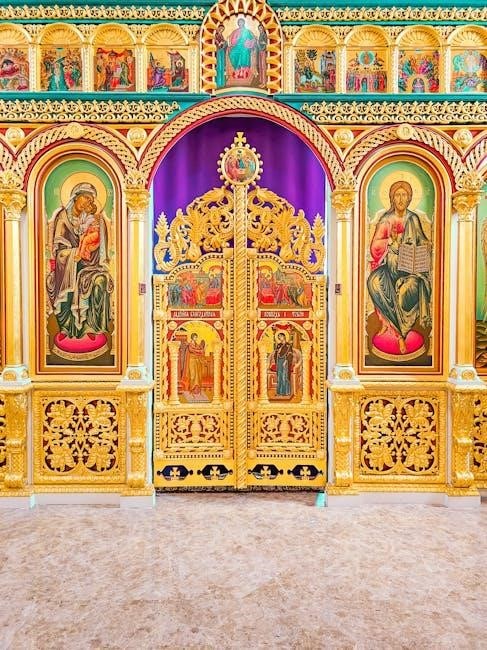
PDF guides dedicated to Orthodox iconography and liturgical practice extensively cover the Royal Doors, the central and most important doors within the iconostasis․ These doors, typically adorned with depictions of the Annunciation – the Archangel Gabriel and the Theotokos – symbolize the entrance to Paradise and Christ’s incarnation․ Detailed PDF analyses reveal their function isn’t merely architectural; they are actively used during liturgical processions․
Priests and deacons pass through the Royal Doors during key moments of the Divine Liturgy, representing Christ’s entry into the world and the movement between heaven and earth․ Scholarly PDFs emphasize that only those in sacred orders may pass through them, reinforcing their sacred character․ Numerous downloadable resources illustrate how the Royal Doors serve as a visual and functional link between the altar and the nave, central to Orthodox worship, as documented in available PDF materials․
Iconostasis in Different Orthodox Traditions
PDF resources showcase diverse Orthodox traditions – Russian, Greek, Serbian, and others – each with unique iconostasis styles and artistic expressions․
Russian Iconostasis: Characteristics
Russian iconostases, extensively documented in available PDF materials, are renowned for their height and the sheer number of icons they display, evolving significantly over time․ Initially simpler, they grew into elaborate, multi-tiered structures, becoming a defining feature of Russian church architecture․
These iconostases aren’t merely dividers but expansive displays of theological narrative․ PDF analyses reveal a characteristic five-row structure: the Deesis, Prophets, Ancestors of Christ, Festal tiers, and Local icons․ The local icons, specific to the church and its patron saint, add a unique regional flavor․
Furthermore, Russian iconostases often feature a ‘Royal Doors’ flanked by Deacon Doors, richly ornamented and symbolizing access to the heavenly realm․ Detailed PDF guides illustrate the intricate carving and gilding techniques employed, showcasing the artistry and devotion invested in their creation․ The style reflects a blend of Byzantine influence and uniquely Russian artistic sensibilities․
Greek Iconostasis: Distinctive Features
Greek iconostases, thoroughly examined in numerous PDF resources, generally present a more restrained aesthetic compared to their Russian counterparts, prioritizing clarity and theological symbolism․ While still dividing the sanctuary from the nave, they typically exhibit a lower profile and fewer tiers, often consisting of three to four rows of icons․
PDF documentation highlights the emphasis on the Deesis row – Christ Pantocrator with the Theotokos and John the Baptist – as the central focal point․ Local icons, depicting saints relevant to the specific church, are also prominent․ The ‘Royal Doors’ are elegantly decorated, but less ornate than those found in Russian traditions․
Furthermore, Greek iconostases often feature a simpler architectural framework, allowing the icons themselves to take precedence․ Scholarly PDFs detail how this reflects a focus on the direct encounter with the divine through the painted images, rather than elaborate ornamentation․ The style embodies a classical elegance and spiritual depth․
Serbian Iconostasis: Artistic Style

Serbian iconostases, extensively documented in available PDF archives, are renowned for their unique artistic style, blending Byzantine traditions with local influences and a distinctive folk sensibility․ These structures, often monumental in scale, showcase a vibrant palette and dynamic compositions, differing significantly from Greek or Russian examples․
PDF analyses reveal a preference for richly carved wooden structures, frequently gilded and adorned with intricate floral motifs and geometric patterns․ The iconography itself is characterized by expressive figures, dramatic narratives, and a strong emphasis on emotional intensity․ Local saints and historical figures often feature prominently alongside canonical depictions․
Scholarly PDFs highlight the influence of medieval Serbian painting and the legacy of monastic workshops․ The Serbian style often incorporates elements of realism and a bold use of color, creating a powerful and visually striking devotional experience․ These iconostases represent a pinnacle of Serbian medieval art․
Other National Traditions (Romanian, Bulgarian, etc․)
Romanian and Bulgarian iconostases, detailed in numerous PDF resources, exhibit distinct national characteristics while remaining rooted in the broader Orthodox tradition․ Romanian examples often feature a blend of Baroque and Renaissance influences, alongside traditional Byzantine iconography, as explored in accessible PDF studies․
Bulgarian iconostases, documented in scholarly PDFs, are known for their vibrant colors, intricate woodcarving, and a tendency towards more simplified, folk-art inspired depictions․ Both traditions demonstrate a unique adaptation of the iconostasis to reflect local artistic sensibilities and liturgical practices․
PDF archives reveal regional variations within each country, influenced by historical factors and the patronage of local monasteries and churches․ These iconostases showcase the diversity and richness of Orthodox artistic expression, offering valuable insights into the cultural identity of these nations․
Digital Resources and PDF Availability
PDF documents detailing iconostasis construction, history, and artistry are widely available online, offering comprehensive research and visual resources for scholars․
Online Archives of Iconostasis Images
Numerous digital archives showcase stunning iconostasis imagery, providing invaluable resources for researchers and enthusiasts alike․ Many institutions and dedicated websites offer high-resolution photographs and detailed documentation of these magnificent structures․ Searching for “Orthodox iconostasis” coupled with “images” yields a wealth of visual material, often linked to scholarly articles available in PDF format․
Websites specializing in Orthodox Christian art frequently curate extensive galleries, categorizing iconostases by region (Russian, Greek, Serbian) and stylistic period․ These archives often include detailed descriptions of the iconography depicted on each tier, aiding in understanding the theological narratives presented․ Furthermore, some archives provide access to digitized versions of historical catalogs and architectural plans, often available as downloadable PDFs․ Researchers can also find relevant images within broader collections of religious art, utilizing advanced search filters to pinpoint specific examples of iconostasis design and craftsmanship․ The availability of these digital resources significantly enhances the study and appreciation of this central element of Orthodox church architecture․
PDF Documents on Iconostasis Construction
Locating detailed PDF documents concerning iconostasis construction requires focused searching within specialized digital libraries and theological repositories․ Many seminaries and Orthodox Church authorities publish guidelines and historical analyses of building practices, often available for download as PDFs․ These documents frequently cover material selection – wood types, gilding techniques – and traditional joinery methods employed in crafting these elaborate structures․
Furthermore, architectural dissertations and restoration reports, frequently disseminated as PDFs, offer in-depth examinations of specific iconostases, detailing their original construction and subsequent modifications․ Searching for terms like “Orthodox church architecture,” “iconostasis restoration,” and “liturgical design” alongside “PDF” yields relevant results․ These resources often include detailed diagrams, measurements, and historical context, providing valuable insights into the complex process of iconostasis creation and the evolution of its design principles throughout Orthodox Christian history․
Scholarly Articles on Iconostasis History (PDF format)
Numerous scholarly articles tracing the history of the iconostasis are accessible in PDF format through academic databases like JSTOR, Academia․edu, and university library archives․ These articles explore the iconostasis’s development from early altar barriers to the elaborate structures found in modern Orthodox churches, detailing its evolving liturgical function and artistic expression․ Research often focuses on regional variations – Russian, Greek, Serbian – and the theological underpinnings of its iconography․
Searching for keywords such as “iconostasis origins,” “Orthodox liturgical art,” and “Eastern Christian architecture” alongside “PDF” will uncover relevant publications․ Many articles analyze the iconostasis’s role in shaping the worship space and mediating between the earthly and divine realms․ These PDFs provide critical perspectives on the iconostasis’s significance, offering insights into its cultural and religious context throughout history, and its continued importance today․
Conservation and Restoration
PDF guides detail challenges in preserving iconostases, outlining icon restoration techniques and ethical considerations for maintaining these vital Orthodox structures․
Challenges in Preserving Iconostasis
Iconostasis preservation presents unique difficulties, extensively documented in specialized PDF resources; A primary challenge stems from the age of many structures, often centuries old, leading to material degradation – wood warping, paint flaking, and structural instability․ Environmental factors, like humidity fluctuations and temperature changes, accelerate this decay, requiring careful climate control within the church․
Furthermore, past restoration attempts, sometimes employing inappropriate materials or techniques, can create new problems․ Identifying and reversing these earlier interventions is a complex task․ The sheer scale of many iconostases, coupled with the intricate detail of the iconography, makes comprehensive assessment and treatment labor-intensive and costly․ Access for conservation work can also be restricted within the sacred space of the church․ Detailed PDF reports often highlight the need for specialized expertise in both art conservation and Orthodox liturgical traditions to ensure respectful and effective preservation․
Techniques for Icon Restoration
Icon restoration, detailed in numerous PDF guides, employs a range of delicate techniques․ Initial assessment, documented in conservation reports (often available as PDFs), determines the extent of damage and appropriate intervention․ Cleaning removes surface dirt and discolored varnish, revealing original paint layers․ Consolidation stabilizes flaking paint using specialized adhesives, carefully applied and monitored․
Structural repairs address wood damage, employing traditional joinery methods whenever possible․ Retouching, or in-painting, fills losses with carefully matched pigments, adhering to ethical guidelines that prioritize reversibility․ Gilding restoration involves reapplying gold leaf to damaged areas․ Comprehensive PDF resources emphasize the importance of minimal intervention, respecting the original artist’s intent and the historical integrity of the iconostasis․ Documentation, including photographs and detailed reports, is crucial throughout the process, ensuring a traceable record of all treatments performed․
Ethical Considerations in Restoration Work
PDF documents outlining best practices in iconostasis restoration consistently emphasize ethical responsibility․ Minimal intervention is paramount; restorers strive to stabilize and preserve, not to recreate or embellish․ Reversibility is a core principle – any treatment must be capable of removal without damaging the original artwork․ Thorough documentation, often compiled into detailed PDF reports, is essential, recording every step of the process and justifying each decision․
Respect for the historical and religious significance of the iconostasis guides all interventions․ Restorers avoid imposing their own artistic interpretations, prioritizing the preservation of the original artist’s intent․ Authenticity is crucial; materials used should be compatible with the original and, where possible, historically accurate․ Consultation with art historians, theologians, and church authorities ensures a holistic and respectful approach, as detailed in specialized PDF guidelines․